PAN India Presence
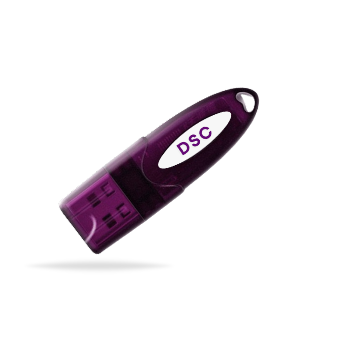
*Authorized DSC
30-Apr-2026
DSC Cloud vs USB Token DSC: Which One is Future-Proof in 2026
Digital Signature Certificates (DSCs) are essential for secure online filings, approvals, and document signing in 2026.
For years, USB Token DSCs dominated the market with hardware-based security. But with remote work, cloud platforms, and faster digital workflows becoming the norm, Cloud DSCs are rapidly gaining popularity.
So which option is truly future-proof in 2026 — the traditional USB Token Digital Signature Certificate (DSC), or the modern Cloud DSC?
Let's compare both to help you choose the right solution for the future.
Buy Digital Signature online quickly and securely for hassle-free digital signing from Capricorn CA.
What is a USB Token DSC?
A USB Token DSC is a Digital Signature Certificate stored inside a physical USB device called a crypto token. To use it, the token must be connected to a computer where the required drivers and signing software are installed.
For years, USB Token DSCs have been the standard choice for secure digital signing in India, especially for GST filings, MCA filings, eTendering, and other compliance-related processes.
The private key remains stored inside the token, which adds a strong layer of security and prevents unauthorized access. However, users must carry the token physically whenever they need to sign documents.
5 Advantages of USB Token DSC
1. Strong Hardware-Based Security
The private key is stored inside the physical USB token, reducing the risk of unauthorized access.
2. Widely Accepted
USB Token DSCs are supported across many government portals and legacy compliance systems.
3. Better Control Over Access
Since the DSC stays in a physical device, users have direct control over when and where it is used.
4. Reliable for High-Security Environments
Many organizations prefer token-based authentication for sensitive or regulated processes.
5. Familiar Workflow
Businesses and professionals who have used DSCs for years are already comfortable with the USB token process.
What is a Cloud DSC?
A Cloud DSC is a Digital Signature Certificate that allows users to sign documents digitally without using a physical USB token.
Instead of storing the certificate in a hardware device, the signing process is managed securely through cloud-based infrastructure with authentication methods like OTP verification, biometrics, or mobile app approval.
This allows users to access and use their DSC from multiple devices and locations, making it ideal for remote work, faster approvals, and modern digital workflows in 2026.
Advantages of Cloud DSC
1. No Physical Token Required
Cloud DSCs eliminate the need to carry a USB token, making digital signing more convenient and hassle-free.
2. Access from Anywhere
Users can sign documents remotely from different locations, which is ideal for remote work and on-the-go approvals.
3. Faster Signing Process
Cloud-based signing reduces delays caused by hardware setup, token connection, or software installation.
4. Multi-Device Compatibility
Cloud DSCs can be accessed across laptops, desktops, and mobile devices without depending on a single system.
5. Better for Remote Teams
Businesses with distributed or hybrid teams can manage approvals and document signing much more efficiently.
6. No Driver or Installation Problems
Unlike USB tokens, Cloud DSCs do not require driver installation or compatibility troubleshooting.
7. Easy to Scale for Businesses
Organizations can manage multiple users and digital signing workflows more efficiently through centralized cloud systems.
Gaining Popularity in 2026: Cloud DSC vs USB Token DSC
Digital signing is evolving rapidly in 2026 as businesses adopt faster and more flexible workflows. Both USB Token DSCs and Cloud DSCs continue to play an important role in secure digital authentication, depending on business needs and usage preferences.
USB Token DSCs remain a trusted choice for many professionals and organizations due to their hardware-based security and strong acceptance across compliance and government platforms. They continue to be widely used for filings, tenders, and regulated digital transactions.
At the same time, Cloud DSCs are gaining popularity as businesses look for more flexibility in remote and multi-device environments. The ability to sign documents securely from different locations has made cloud-based signing increasingly attractive for modern digital workflows.
As digital transformation continues across industries, both solutions are being adopted in different ways
Future Outlook: Which One is Better?
As digital workflows continue to expand in 2026, both USB Token DSCs and Cloud DSCs are expected to remain important in the digital signing ecosystem.
Cloud DSCs are expected to see stronger adoption as businesses move toward remote operations, faster approvals, and cloud-based infrastructure. The demand for flexible, device-independent signing solutions is increasing across modern workplaces.
However, USB Token DSCs will continue to be trusted for compliance-heavy environments, government-related processes, and organizations that prefer hardware-based control over digital signatures. Their long-standing acceptance and familiarity make them a reliable choice for many users.
Rather than one completely replacing the other, the future may involve a hybrid approach where businesses choose the solution based on their workflow and preferences.
Get your Capricorn USB token DSC today!
Final Verdict
Both USB Token DSCs and Cloud DSCs offer secure and legally valid digital signing solutions in 2026. The right choice depends on how you work, your security preferences, and your business requirements. So buy cloud dsc online or a DSC USB token, whichever you need USB Token Digital Signature in India remains a strong choice for users who prefer hardware-based control and widely accepted signing methods for compliance and government-related processes.
FAQ
1. Which is better: Cloud DSC or USB Token DSC?
Both options offer secure digital signing, but the better choice depends on your needs.
USB Token DSCs are preferred for hardware-based control and traditional compliance workflows, while Cloud DSCs are ideal for remote access, faster approvals, and flexible digital operations.
2. Is Cloud DSC valid in India in 2026?
Yes, Cloud DSCs are legally valid in India when issued and managed according to the guidelines set by licensed Certifying Authorities under the IT Act, 2000.
3. Is USB Token DSC required for government portals?
Many government and compliance portals continue to support and widely use USB Token DSCs in 2026. Some organizations and workflows still prefer token-based authentication for added control and security.
4. Can I use Cloud DSC for GST filing?
USB DSC tokens are used for secure filings on GST Portal.
Cloud DSCs can be used for GST filings if the platform supports cloud-based digital signing authentication.
5. Can Cloud DSC be used for MCA filings?
Cloud DSC adoption for MCA-related processes may vary depending on the platform and integration requirements being used.
6. Is Cloud DSC safe and secure?
Yes, Cloud DSCs use secure encryption methods along with authentication layers like OTP verification and biometrics approval to protect digital signing processes.
7. Can USB Token DSC be hacked?
USB Token DSCs are designed with strong hardware-based security. However, like any digital system, security also depends on safe handling practices, password protection, and preventing unauthorized access.
8. What are the advantages of Cloud DSC over USB Token DSC?
Cloud DSCs offer benefits like remote access, multi-device compatibility, faster signing workflows, reduced hardware dependency, and improved convenience for remote and hybrid work environments.
9. Can a DSC be renewed before expiry?
Yes, a Digital Signature Renewal can be easily done before its expiry date. Renewing it in advance helps avoid interruptions in important tasks like GST filings, MCA submissions, eTendering, and digital document signing.